Features of the Savannah Cat
The Savannah cat, a breed renowned for its striking appearance and distinctive personality, stands out as one of the most exotic and captivating felines in the world. Developed through a crossbreeding of domestic cats with the serval (a wild African cat), Savannahs embody both wild allure and domestic charm. Here’s a closer look at the key features that make the Savannah cat so unique.
Appearance
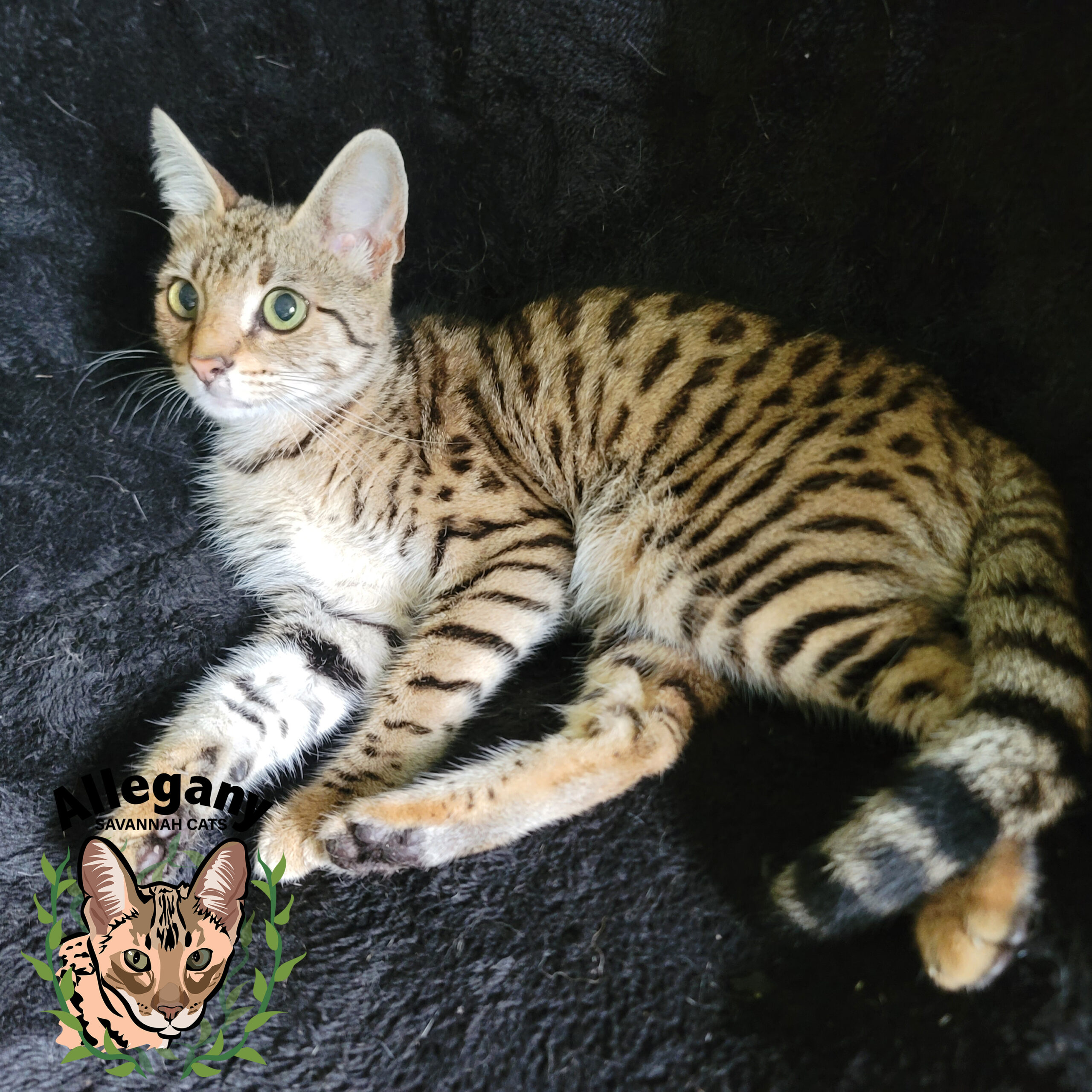
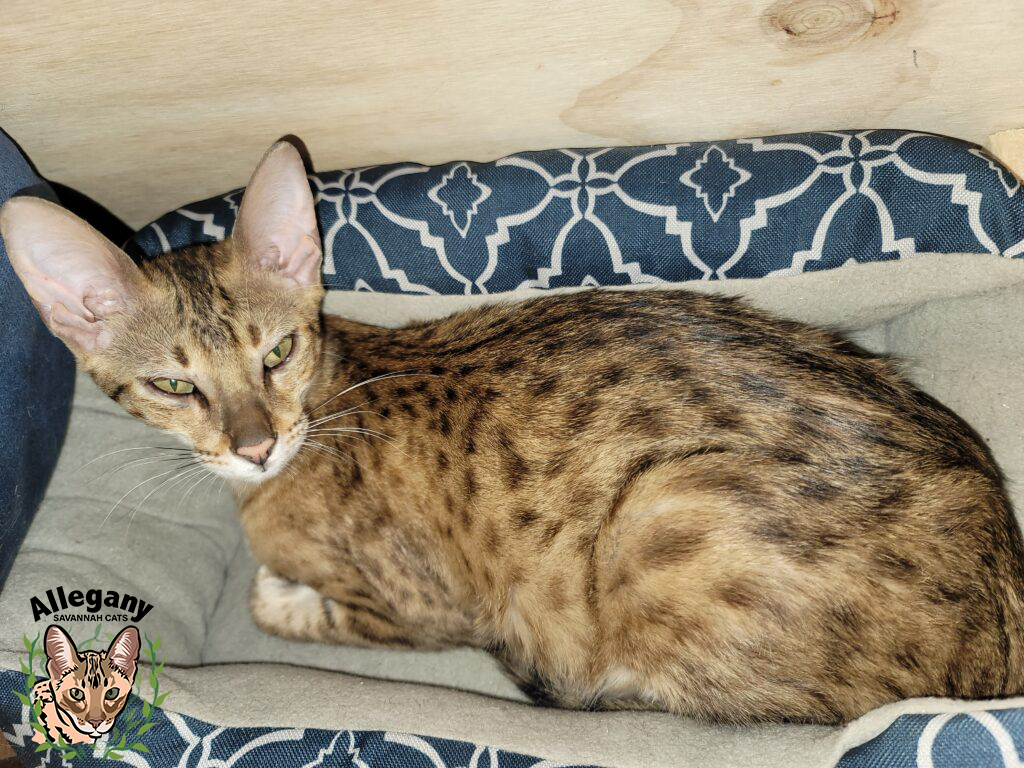
- Spots – Savannah cats have distinctive spots that mimic the look of their serval ancestors. These spots are usually solid, round, or oval, scattered across their coat in a random pattern. They can be black, brown, or tan, giving the cat a wild, exotic appearance. The spots are most prominent on their body, legs, and tail.
- Ears – Savannah cats have large, high-set ears that are wide at the base and slightly rounded at the tips. Their ears are designed for acute hearing, a trait inherited from servals, and often have “ocelli” markings (dark spots) on the back, which look like eyes to deter predators. The ears are one of their most striking features.
- Long Bodies – Savannah cats have long, slender bodies that make them look elegant and agile. Their elongated torsos, paired with long legs, give them a taller and leaner appearance compared to most domestic cats. This body structure helps them jump great distances and heights.
- Extra Collar Bones – Savannah cats often have an extra set of collarbones, or clavicles, compared to other domestic cats. These bones are more pronounced than in typical cats, appearing as a hump behind their neck. They greatly contribute to their flexibility and strength, especially for jumping and climbing.
- Color – Savannah cats come in a range of coat colors, including brown, silver, black, and smoke. The most common is the brown spotted tabby, with a warm golden or tawny background and dark spots. Their colors are vibrant, and the contrast between the base coat and spots adds to their wild look.
Behavior
- Dog-like – Savannah cats often show dog-like behaviors, such as following their owners around, playing fetch, and responding to their names. They’re more social and interactive than many other cat breeds, enjoying human company and sometimes even greeting guests like a dog would.
- Loyal – Savannah cats are known for their strong loyalty to their owners. They tend to form tight bonds with one or a few people, often sticking close to them and showing affection through head-butts or purring. Their loyalty makes them devoted companions.
- Leash Training – Savannah cats can be easily leash-trained due to their curious and active nature. They enjoy exploring outdoors, and with consistent training, they can learn to walk on a leash like dogs, making them great for supervised adventures outside. If you decide to try to leash train your savannah, do so in an area where cars aren’t an issue and where unexpected situations could spook your Savannah. It isn’t as easy to control a spooked cat as it would be a dog. Gently grabbing and holding the extra skin on the back of your cat’s neck releases endorphins that are also released when a mother carries her kittens so you can use this to calm them in stressful situations. You also need to make sure the harness for your cat is very secure, some are too slender to be able to do this safely.
- Intelligence – Savannah cats are highly intelligent, often solving problems like opening doors or figuring out puzzles. Their sharp minds make them quick learners, but they can also get into mischief if not mentally stimulated with toys, training, or activities.
Conclusion
The Savannah cat’s blend of wild elegance and domestic affection makes it a fascinating and desirable breed for many cat enthusiasts. With their striking appearance, vibrant personality, and active nature, Savannahs offer a unique companionship experience. However, prospective owners should be prepared to meet their needs for exercise, mental stimulation, and social interaction to ensure a happy and healthy life for these extraordinary cats.